

The Ultimate Guide to Ethical Sourcing for Casino Gift Shops
Last Updated: November 19, 2026
Quick Summary
Ethical sourcing for casino gift shops means buying merchandise only from suppliers who can document fair labor, honest materials, and traceable origins. Run every new wholesale supplier through the same due diligence sequence, document results in a shared file, and re-verify annually or whenever production location, ownership, or subcontractors change.
- Map your product categories first, then concentrate verification where ethical exposure is highest.
- Ask suppliers for production locations, subcontractor names, and a written code of conduct before discussing price.
- Verify certification evidence with a certificate number and issuing body you can check independently.
- Place a limited trial order before committing to a full program; skipping it is the most common mistake.
- Treat a supplier approval unreviewed for more than twelve months as expired.
Table of Contents
- Why Ethical Sourcing Matters for Casino Gift Shops
- The Core Principles of Responsible Sourcing in Retail
- Mapping Product Risk Across Your Gift Shop Categories
-
Supplier Due Diligence and Verification Steps
- Step 1: Collect Basic Disclosures Before You Discuss Price
- Step 2: Request the Code of Conduct and Read It
- Step 3: Verify Certification Evidence, Not Certification Claims
- Step 4: Review Audit History and Corrective Actions
- Step 5: Test Traceability With a Specific Question
- Step 6: Sample the Product and Start Small
- Handling Subcontracting and Supplier Claims
- A Casino-Specific Governance Layer
- A Repeatable Vetting Scorecard
- Building a Tribal Casino Retail Strategy Around Authenticity
- Authentic Indigenous Products for Retail: What to Look For
- Native Inspired Gifts for Museum Shops and Cultural Venues
- Implementation, Budgets, and Procurement Trade-Offs
- Measuring Sourcing Outcomes and Telling the Story
- Scheduling a Product Presentation With American Native™
- Frequently Asked Questions
Why Ethical Sourcing Matters for Casino Gift Shops
Ethical sourcing for casino gift shops means buying merchandise only from suppliers who can document fair labor, honest materials, and traceable origins, now a core retail discipline, not a nice-to-have. American Native™ builds product programs for tribal casinos, resorts, and museums, and guests increasingly ask where a product was made before they ask the price.
The Business Case Beyond Good Intentions
A gift shop is the guest's last physical touchpoint before leaving, and what they carry home either reinforces the property's story or undercuts it. A clearly sourced, well-told product mix earns stronger repeat visits and word of mouth than a shelf of generic souvenirs at lower margins.
Where Casino Retail Differs From Standard Gift Retail
Casino gift shops operate under pressures most gift retailers never face:
- Guests arrive in a celebratory, impulse-buying mood, so turnover is fast and displays matter
- Tribal properties carry a cultural obligation a standard resort shop does not
- Player rewards and comp programs push volume through specific SKUs
- Regulatory and governance expectations extend to vendors, not just operations
That combination means a sourcing mistake costs more than a refund. It costs trust.
The Core Principles of Responsible Sourcing in Retail
Responsible sourcing in retail rests on two non-negotiables: you know who made the product, and you know they were paid and treated fairly. Everything else, from certifications to packaging, supports those two facts.
Supplier Transparency and Traceability
Supplier transparency means the vendor will tell you, in writing, where a product was made and by whom. Traceability means that claim can be followed from finished item back to workshop or factory. Ask for the production location, the maker or facility name, and the tier of supplier involved; a vendor who cannot answer in specifics is telling you something useful.
Fair Wages and Dignified Work
Fair trade and fair wage commitments should be documented, not implied. Look for a written supplier code of conduct covering wages, hours, working conditions, and the right to refuse unsafe work. Third-party certification and social compliance audits add independent weight, as does a published corrective action process for when an audit finds a problem.
Mapping Product Risk Across Your Gift Shop Categories
Not every SKU carries the same ethical risk, and treating them all identically wastes your due diligence budget. Browsing the gifts and collectables category lets you see the actual product types you'd be risk-mapping. Map your categories first, then concentrate verification where the exposure is highest.

Merchandise, Souvenirs, and Sundries: Where Risk Hides
Souvenirs and destination-themed products carry cultural risk when designs borrow from Indigenous imagery without permission. Sundries and convenience items carry lower labor risk but raise environmental questions around packaging and single-use materials.
High-Risk vs. Low-Risk Sourcing Decisions
| Category | Primary Risk | Verification Priority | Practical Move |
|---|---|---|---|
| Apparel and blankets | Labor conditions, origin claims | High | Require facility disclosure and audit records |
| Artisan and cultural goods | Cultural appropriation, provenance | High | Confirm maker identity and permission to use designs |
| Ceramics and drinkware | Materials safety, glazing | Medium | Request material and finish documentation |
| Sundries and convenience | Packaging waste, environmental impact | Medium | Favor recyclable or reduced packaging |
| Promotional gifts and player rewards | Volume-driven shortcuts | Medium | Lock specs before ordering at scale |
That last row matters more than it looks. Promotional gifts and player rewards are ordered in bulk under deadline, which is exactly when shortcuts get taken. Set your supplier standards before the order, not after.
Supplier Due Diligence and Verification Steps
Supplier due diligence is a repeatable process, not a one-time gut check. Run every new wholesale supplier through the same sequence, document results in a shared file, and re-verify annually or whenever the supplier changes production location, ownership, or subcontractors. This matters especially in casino retail, where vendor conduct reflects on the property and, for tribal operations, on the governing body.
Step 1: Collect Basic Disclosures Before You Discuss Price
Ask for the legal business name, ownership structure, every production location by address, and the product origin for each item you plan to stock. Request the name of any subcontractor or finishing facility, not just the primary factory. A vendor who answers only for final assembly has told you half the story.
Step 2: Request the Code of Conduct and Read It
Confirm the supplier has a written code covering fair wages, hours, working conditions, the right to refuse unsafe work, freedom of association, and no child or forced labor. Read the wage language closely: meeting local minimum wage is weaker than committing to a living wage benchmark or documented wage ladder.
Step 3: Verify Certification Evidence, Not Certification Claims
Third-party certification should come with a certificate number and an issuing body you can check independently. Common schemes include Fair Trade certification for artisan and agricultural goods, Global Organic Textile Standard (GOTS) for organic cotton textiles, OEKO-TEX® Standard 100 for material safety, and Fair Labor Association or Social Accountability International (SA8000) social compliance for factories.
Step 4: Review Audit History and Corrective Actions
Ask for social compliance audit reports, the audit firm, the date, findings, and the corrective action plan with closure dates. An audit with open findings is not automatically disqualifying; one with open findings and no closure plan is. Repeated overtime findings, unresolved wage deductions, or recurring safety findings signal a supplier that documents problems without fixing them.
Step 5: Test Traceability With a Specific Question
Pick one SKU and ask the supplier to walk it back from finished item to raw material or workshop. You are testing whether the answer is specific and consistent, not impressive. A supplier who can name the facility, region, and supplier tier for a single product is more credible than one offering a general statement about ethical practices across the catalog.
Step 6: Sample the Product and Start Small
Product quality checks catch what paperwork misses: color consistency, finishing, packaging durability, and delivery timing. Place a limited trial order before committing to a full program.
Watch out: skipping the trial order is the most common mistake we see, and it is also the most expensive one to correct once promotional deadlines are set.
Handling Subcontracting and Supplier Claims
Subcontracting is where most traceability breaks. Ask each supplier to disclose whether production is subcontracted, name the subcontractors, and confirm the code of conduct and audit requirements flow down to them. For claims that cannot be independently verified, such as "handmade" or "locally made," ask for the evidence: workshop address, maker names, or a cooperative agreement.
A Casino-Specific Governance Layer
Casino procurement carries expectations standard gift retail does not. Build a vendor approval record capturing the due diligence steps above, the approving manager, and the review date, and route it through the same compliance or governance channel used for other vendors. For tribal operations, confirm vendor relationships align with the nation's procurement policies and cultural protocols.
A Repeatable Vetting Scorecard
Score each supplier on five dimensions before approval: disclosure completeness, code of conduct strength, verified certification, audit history and corrective action closure, and trial order performance. A simple pass, conditional, or fail rating per dimension gives buyers a defensible record and speeds annual re-verification. Conditional approvals should carry a named follow-up item and due date, not a vague note to check back later.
Building a Tribal Casino Retail Strategy Around Authenticity
A tribal casino retail strategy works best when authenticity is the organizing principle rather than a marketing layer.
For retail managers weighing how to structure that mix, our guide to custom merchandise for tribal casinos walks through product selection, branding, and design decisions specific to casino retail.
Order volume is the other question we hear constantly. Smaller resorts often assume a custom program is out of reach.
Authentic Indigenous Products for Retail: What to Look For
Authentic Indigenous products for retail are items where the maker's identity, community, and permission to use a design can be verified, not just implied. Three checks separate real from replica:
- Named maker or nation. The vendor can tell you who made the piece and which tribal nation or community it comes from.
- Provenance documentation. Artist participation, licensing, or a cooperative relationship you can review.
- Design integrity. Traditional patterns are used with permission, not lifted from stock imagery.
If you want a deeper buyer's guide on identifying genuine craftsmanship before you commit to a supplier relationship, our breakdown of authentic Native American blankets covers materials, weave, and the questions worth asking. The same logic applies across decor, drinkware, and gifts.
Native Inspired Gifts for Museum Shops and Cultural Venues
Native inspired gifts for museum shops carry a higher bar than general retail because the audience is informed and the institutional reputation is on the line.
That makes storytelling part of the product.
For retail buyers, the practical test is simple: could you explain this item's origin to a curator without hesitating? If not, the sourcing file is incomplete.
Implementation, Budgets, and Procurement Trade-Offs
Rolling out an ethical sourcing program is a budgeting exercise as much as a moral one. Cost, margins, and minimum order quantities decide what is actually achievable in year one.
Cost, Margins, and Minimum Order Realities
Responsibly sourced goods usually cost more per unit. Artisan-made and locally made products cannot match high-volume import pricing, and minimum order quantities on custom programs can be steep for a small shop.
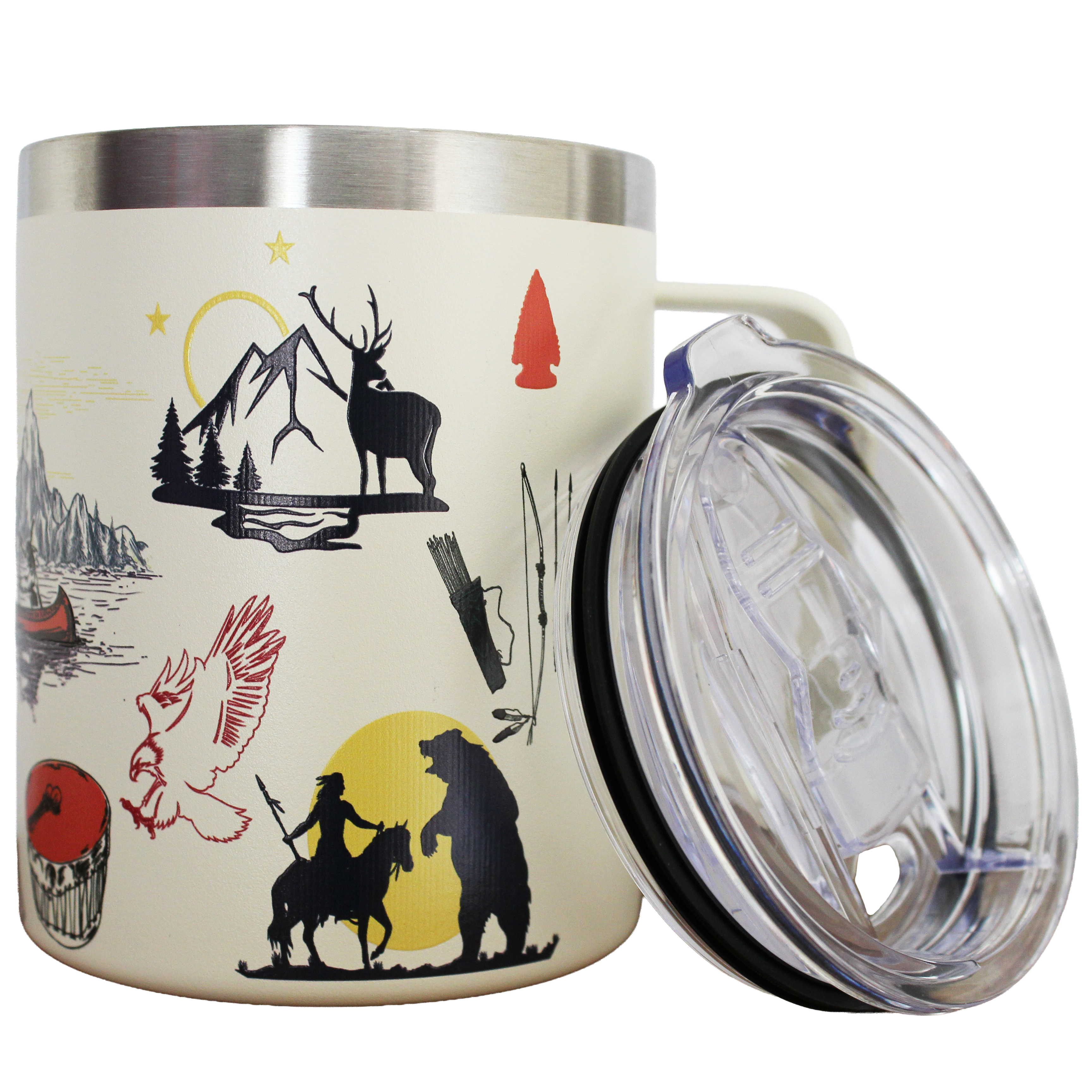
For a concrete sense of unit economics, our American Native™ Heritage Camp Mug, a 12 oz stainless steel piece, is the kind of item worth pricing against your target margin before you build a capsule around it.
Phasing a Program for a Small Resort
A workable sequence for a smaller property:
- Phase 1: Audit current suppliers against the due diligence steps above
- Phase 2: Introduce one verified capsule of high-meaning items
- Phase 3: Add storytelling signage and staff talking points
- Phase 4: Expand categories based on sell-through data
Measuring Sourcing Outcomes and Telling the Story
Impact measurement closes the loop between what you promised guests and what your shelves actually contain. The gap competitors miss is a practical measurement framework: which numbers to track, how to define them, how often to review them, and how to turn them into both procurement decisions and guest-facing storytelling.
The Core Sourcing KPIs
Track a small set of metrics that a retail manager can actually maintain. Define each one in writing so the numbers stay comparable quarter to quarter.
- Spend with verified suppliers. Share of gift shop purchasing dollars going to suppliers that completed due diligence and hold a current approval record. Report as a percentage of total spend, not a vendor count.
- Traceable product share. Percentage of SKUs with documented origin at the facility or workshop level. Count a SKU as traceable only if the file names the production location and supplier tier.
- Audit completion rate. Share of high-risk suppliers with a social compliance audit completed within the past twelve months.
- Corrective-action closure rate. Percentage of audit findings closed by their committed dates, the metric that separates suppliers who fix problems from those who document them.
- Local and small-business spend. Share of purchasing dollars going to locally made, artisan, or small-business suppliers, which matters for destination and tribal properties where local economic benefit is part of the story.
- Sell-through by sourcing tier. Sell-through rate for verified versus unverified product, to see whether ethical sourcing helps or hurts margin.
Setting Targets and a Review Cadence
Set a baseline in the first quarter, then improvement targets for the next four quarters, commonly, raising verified spend share and traceable product share by a set number of points each quarter while holding corrective-action closure above a high threshold. Review the dashboard monthly with the buyer and quarterly with whoever owns vendor governance. Keep definitions stable; changing how a metric is calculated mid-year makes trend lines meaningless.
Turning Metrics Into Procurement Decisions
Metrics should change what you buy, not just what you report. Suppliers below the audit completion threshold go on a watch list with a remediation deadline.
Watch out: reporting a metric nobody acts on trains the team to treat measurement as paperwork, and the program quietly stalls.
Telling the Story Where Guests Will See It
Storytelling is a retail function with its own execution details. Shelf cards should name the maker or nation, the material, and the origin in plain language, consistent with the sourcing file. Staff talking points should be short enough to say at the register and specific enough to be true.
Reporting Upward and Outward
Prepare a one-page quarterly summary for property leadership: verified spend share, traceable product share, audit completion, corrective-action closure, local spend, and sell-through by sourcing tier. The same summary, minus commercially sensitive detail, can support guest-facing communication and community reporting. Consistency between internal numbers and the public story is what makes the program credible over time.
Scheduling a Product Presentation With American Native™
The fastest way to judge whether a heritage product program fits your property is to see the goods.
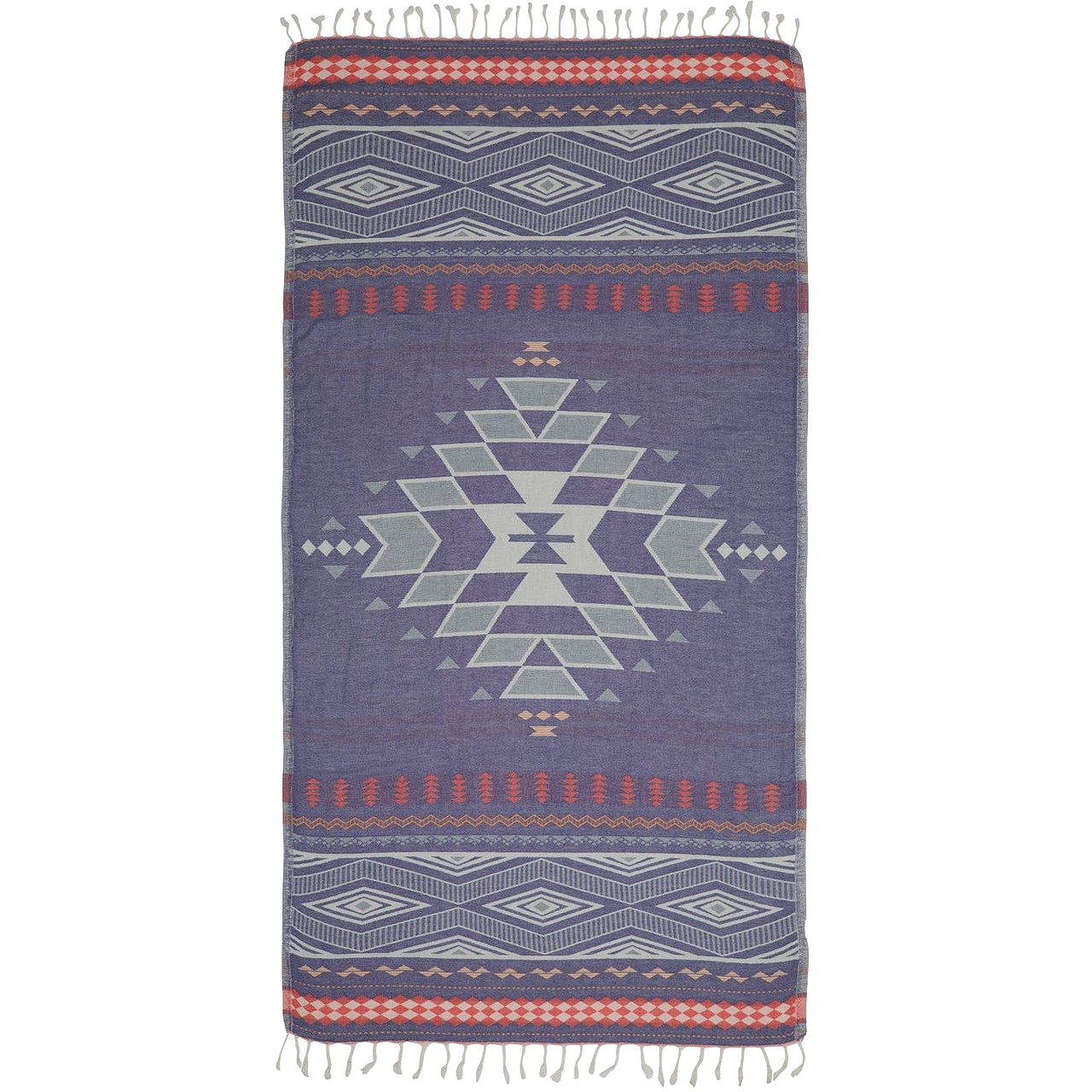
You can preview a representative piece first: the American Native™ Turkish Beach Towel in Blue/Red is 100% organic Turkish cotton, Oeko-Tex® certified, sand-resistant, and sized 37" x 68" at $36.00.
Guests remember what they carry home, and a gift shop that sources with care turns a souvenir into a reason to return.
Frequently Asked Questions
What is ethical sourcing in the context of retail gift shops?
Ethical sourcing means choosing suppliers who meet clear standards for fair wages, safe labor conditions, environmental responsibility, and honest product origin. For a gift shop, that shows up in concrete practices: a written supplier code of conduct, verified product origin, third-party certification where it applies, and audits that lead to corrective action rather than a one-time checkbox. It also means being able to tell a customer where a blanket or mug came from and who made it.
How can tribal casinos benefit from sourcing indigenous-made products?
Carrying authentic indigenous products for retail can turn a gift shop from a souvenir stop into part of the guest experience. Guests who care about culture buy items with a story, and those items carry higher perceived value than generic merchandise. A tribal casino retail strategy built on authentic goods also reinforces the property's own identity, supports Native-owned businesses and artisans, and gives staff something meaningful to talk about at the register. The result is stronger brand reputation and repeat visits.
How do you verify ethical supply chain practices for gift shop inventory?
Start with documentation: supplier code of conduct sign-off, product origin records, and certification evidence where relevant.
Why is storytelling important in casino retail merchandising?
Storytelling is what separates a $36 heritage towel from a generic beach towel. When a guest understands the design reference, the maker, and the cultural context, the item becomes a gift with meaning rather than a commodity. Signage, shelf cards, and staff talking points that explain product origin do two things: they justify the price and they build customer loyalty.
What criteria should casino buyers use to select ethical suppliers?
Useful checks include verified product origin, documented fair wages and labor conditions, and environmental claims you can substantiate. Add supplier diversity as a tiebreaker, since Native-owned and small-business suppliers often deliver both authenticity and community impact. Score each supplier against these criteria before placing a first order, then revisit the score annually.
Can a small resort run a custom merchandise program without large order volumes?
Yes, if you phase it. Start with a narrow assortment, such as one textile line and one drinkware line, prove sell-through, then expand. Ask suppliers directly about minimum order quantities. American Native™ offers specialized product programs for tribal-owned casinos, resorts, and museums. Schedule a product presentation to walk through what fits your volume.


